Taiwan-Matsu No. 4 Subsea Cable Put into Operation, MODA Strengthens Communication Resilience of Matsu
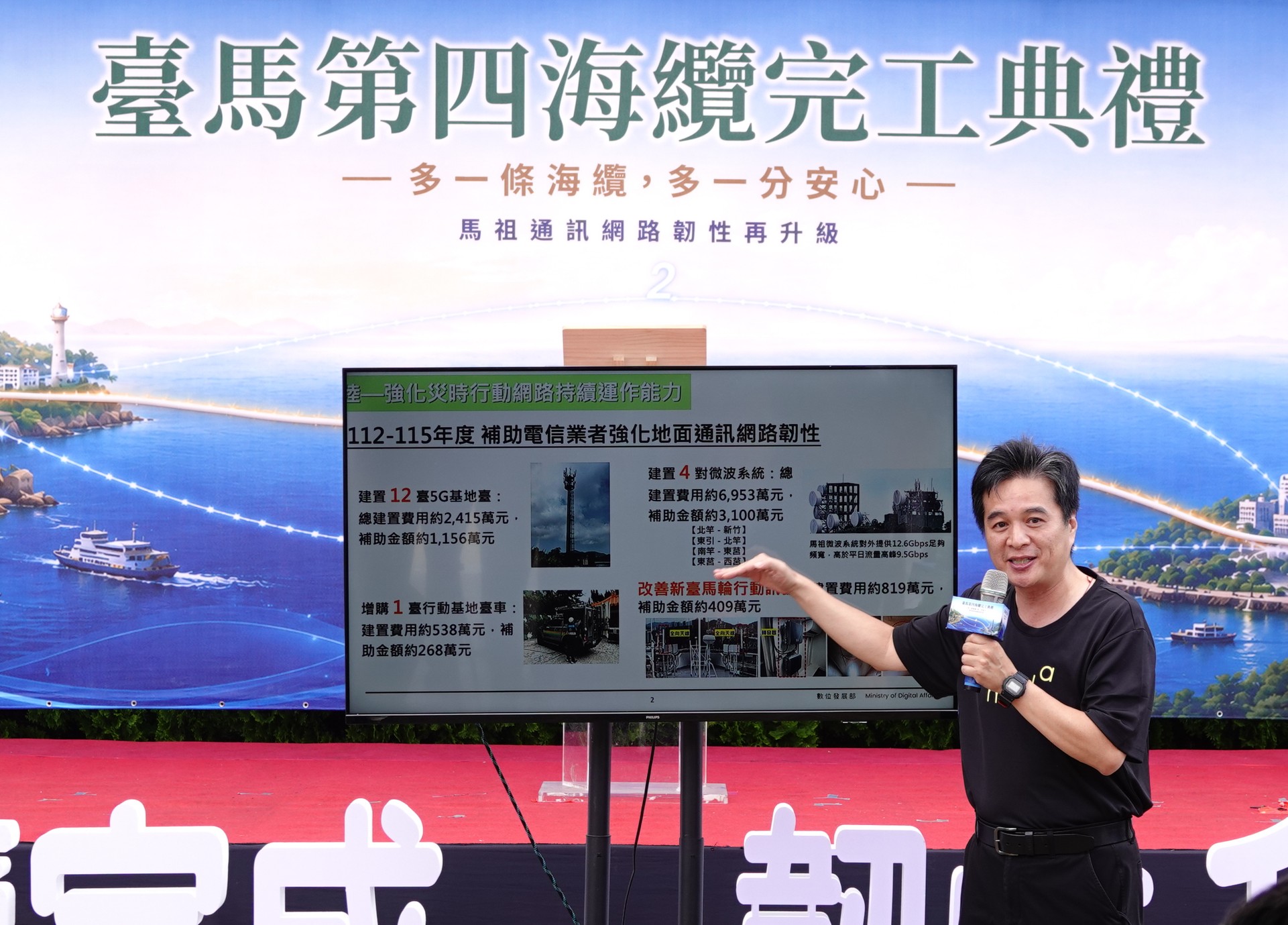
The Ministry of Digital Affairs (MODA) announced today (18th) that the Taiwan-Matsu No. 4 subsea cable has been officially completed and put into use. The new subsea cable will further expand Matsu’s external communication capacity and enhance the overall network backup capability. MODA continues to leverage policy resources such as the Forward-Looking Infrastructure Development Program to promote the construction of diverse communication infrastructure, including subsea cables, microwave, satellites, and high-resilience base stations with disaster resistance capabilities. This will steadily build a land, sea, and air backup architecture, enabling government command, disaster relief, medical services, and public communication services to continue operating in the event of an emergency, thereby enhancing the resilience and responsiveness of the overall communication system.
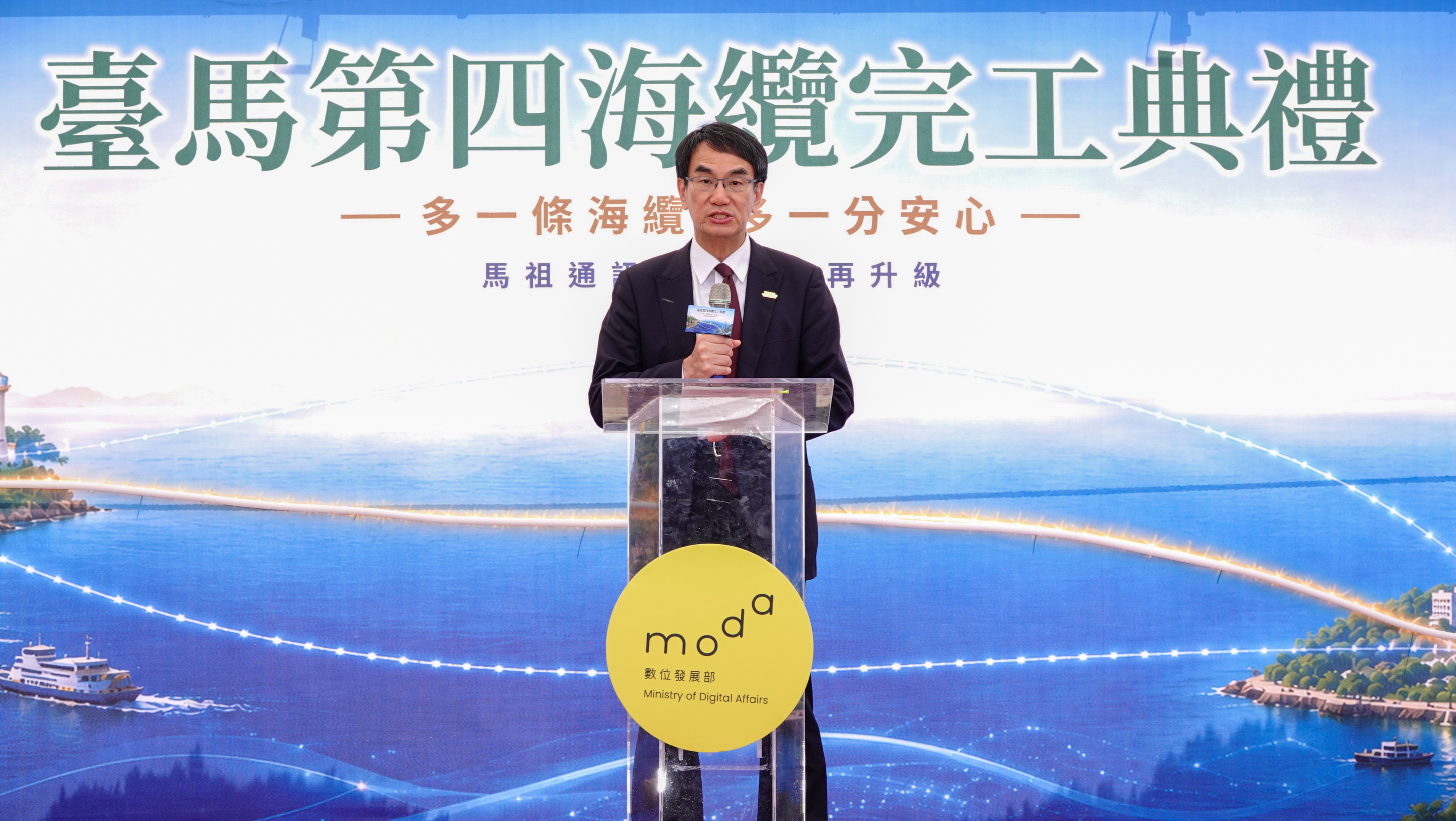
MODA held the Inaugural Ceremony of the Taiwan-Matsu No. 4 Subsea Cable at the White Horse King Park in Lienchiang County this morning. Premier Cho Jung-tai attended the ceremony in person, demonstrating the government’s emphasis on communication infrastructure and resilience policies for outlying islands. Legislator Chen Hsueh-sheng, Lienchiang County Magistrate Wang Chung-ming, Lienchiang County Council Speaker Chang Yung-chiang, Chunghwa Telecom Senior Executive Vice President Young Hey-chyi, and other key stakeholders from the central and local governments also attended the ceremony to witness this important moment in the construction of Matsu’s communications resilience.
Lin Yi-jing, Minister of Digital Affairs, noted that Matsu was tested by several severe cable breakages in the past. Faced with the dual threats of extreme weather and geopolitics, MODA adheres to the strategy of “redundancy upon redundancy,” expanding microwave capacity, deploying satellite networks, and subsidizing telecommunications operators to install new subsea cables. The launch of the Taiwan-Matsu No. 4 subsea cable today is a new milestone in enhancing Taiwan’s digital resilience. Making adequate preparations is the best solution to deal with emergencies.
MODA explained that the Taiwan-Matsu No. 4 subsea cable was constructed by Chunghwa Telecom with subsidies from MODA under the Forward-Looking Infrastructure Development Program. It connects the main island of Taiwan to Dongyin, Nangan and Xiju in Matsu, with a total length of nearly 300 kilometers. With the addition of the fourth subsea cable, the overall transmission capacity has increased to approximately 1.9 Tbps. Apart from expanding the communication capacity between Taiwan and Matsu, it also forms a multi-faceted communication backup architecture together with the existing Taiwan-Matsu No. 2 and No. 3 subsea cables, as well as microwave and satellite systems. This can further ensure the stable operation of communication services in outlying islands.
MODA pointed out that the Taiwan-Matsu No. 4 subsea cable was designed with risk assessments of waterways and fishing activities in mind. To mitigate the risk of damage to the cable from ships and fishing operations, a double-armored cable was adopted, and the cable was buried with a target burial depth 2.5 meters. Furthermore, the Submarine Cable Automatic Warning System (SAWS), which combines AI recognition with the Automatic Identification System (AIS), has been introduced, and cooperation with relevant units such as the Coast Guard has been carried out to strengthen the safety protection of subsea cables.
With the official commissioning of the Taiwan-Matsu No. 4 subsea cable, and the expected completion of the Taiwan-Penghu No. 4 and Penghu-Kinmen No. 4 subsea cables by the end of this year, the communication backup capabilities of the outlying islands will be further enhanced. MODA will continue to invest in building communication resilience. Through public-private partnerships and inter-ministerial cooperation, MODA will improve diverse communication infrastructure and enhance the stability and disaster resilience of communication services in outlying islands, creating a more reliable communication environment for residents of outlying islands.